

Mobility Group
THE WOLFSON CENTRE FOR INHERITED NEUROMUSCULAR DISEASE (CIND)
The Clinical Research Team:
Prof Tracey Willis, Dr Richa Kulshrestha, Catherine Parry (specialist nurse), James Jones (Specialist nurse), Natalie Grigg (DMD HUB advanced nurse practitioner and trials nurse), Nick Emery (senior specialist neuromuscular physiotherapist), Ellen Thompson (specialist neuromuscular physiotherapist with respiratory interest and DMD HUB physiotherapist) Kate Stracham (specialist neuromuscular physiotherapist), Kerry Jones (care advisor), Alison Lyle (Occupational therapist), Yvette Easthope-Mowatt (Clinical Psychologist), Chloe Perry (DMD HUB trials coordinator), Sarah Clamp (Senior study support officer)
The Laboratory Research Team:
Prof. Heidi Fuller, Prof. Glenn Morris, Prof. Caroline Sewry, Dr Ian Holt, Dr Sharon Owen, Affiliate member: Dr Melissa Bowerman (Keele)
The clinical research team are actively engaged in several pioneering clinical trials and studies involving patients at RJAH and further afield. The internationally recognised laboratory team, meanwhile, work to find new ways to diagnose and treat inherited neuromuscular diseases. By designing and developing highly specialised research tools and combining these with the use of cutting edge “omics” technology, their research aims to unravel the complexities of disease mechanisms and identify new targets for therapy development.
The laboratory and clinical teams work closely together to promote research and clinical trials as part of clinical practice and access for all. As a group, they are highly committed to training the next generation of scientists and doctors at RJAH and work closely with affiliated Universities at Keele, Manchester and Chester to deliver this.
The Muscle Team continues to hold “Centre of Clinical Excellence” status for paediatric and adult patients, an award given by the Muscular Dystrophy UK (MDUK) in 2019, and then re-issued after a further audit with added clinical excellence in research as well as Centre of clinical excellence for paediatrics and adult patients in 2024. The team were also proud to be awarded Duchenne Muscular Dystrophy (DMD) HUB status in November 2019 for DMD clinical trials and since then in 2024 have also been accredited as a Duchenne accredited centre, by the World Duchenne association.
The Laboratory Research Team have had a productive year working on active research projects funded by UK-based charities. Beyond the impact of the charity-funded work on advancing research into neuromuscular disorders, grant awards benefit the research group enormously by retaining the best scientists; by facilitating new researchers with valuable skills to join the discipline; by training the next generation of researchers; and by facilitating new transnational research collaborations. The team are particularly grateful to the Orthopaedic Institute for their support of pilot studies within CIND which is a vital step towards gaining proof-of-concept evidence for larger grant applications to external funding organisations.


CLINICAL RESEARCH PROJECTS
It continues with SMA REACH both for paediatrics and adults and Oswestry was acknowledged recently as one of the four top recruiting sites. They have also fully recruited to the rare 12 disease project for DMD and have various studies in set up including Myotonic dystrophy trials HERCULES, a trial for RYR1 and a further DMD trial. They were awarded the status of DMD HUB site in 2019 and with this funding for research physio, advanced nurse practitioner and coordinator and all posts have continued since the pump priming and continue to grow the trials and research that is possible.
The team have also successfully completed several studies with patients with Facioscapulohumeral Dystrophy (FSHD) in collaboration with both Keele and Liverpool University, including a pilot study of arm cycling in patients with FSHD, a FSHD ultrasound and biomechanics project and more recently a qualitative study, “Best practice conservative non-pharmacological management for patients with FSHD”. Prof Willis is also one of the founder members of FSHD UK, bringing together six clinical sites, which aims to harmonise FSHD clinical appointments and enable UK trial readiness for FSHD. As part of this work Prof Willis was also asked to lead on ‘Paediatric FSHD’ as one of 4 organisers for an international ENMC workshop in Amsterdam in 2024, and is now writing up and leading on the clinical management guidelines.
They have also collaborated with Manchester University and were a pilot site for the TRUNK study looking at objectively assessing truncal control in SMA patients as well as DMD and myopathy patients. Both these projects are being presented as posters at the WMS international muscle conference in Vienna in October 2025.
Treatment of SMA has been greatly advanced by availability of gene therapy for severe SMA since mid-2021. Urgent work is now underway via a national group to establish a Newborn Screening programme within the UK. Prof Willis was appointed by NHS England to a fixed-term role on a national gene therapy multidisciplinary team during the set up in the first year in the UK. Nusinersen, an intrathecal treatment, for patients with severe SMA continues now through a Managed Access Agreement (MAA) for both children and adults with SMA type 1,2 and 3 and as of January 2022, Risdiplam, an oral therapy, also became available for these patients as a MAA. Prof Willis is now part of the SMA care UK initiative and on the transitional working group.
The Clinical Team has been the main hub in collaboration with University Hospital of North Midlands in the West Midlands region for delivering Nusinersen for children in the West Midlands and through Birmingham (UHB) and Salford for the adults who attend Oswestry. This has continued although many children and adults now receive gene therapy or oral risdiplam. The outcome of 5 years of care in paediatrics with SMA was presented at the WMS internation muscle conference in Prague in 2024 and is being written up for publication.
LABORATORY RESEARCH PROJECTS
Spinal muscular atrophy
Without treatment, SMA is the most common genetic cause of death in infants in the UK, and it is estimated that there are approximately 2,000 – 2,500 children and adults living with the condition in the UK. Although recent research has led to breakthroughs in the treatment of SMA type 1, less attention has been given to understanding the molecular pathways involved in the less severe types of SMA.
With funding from Sparks and Great Ormond Street Hospital (GOSH) Children’s Charity, a study led by Dr Heidi Fuller and Dr Sharon Owen as postdoctoral research associate, examined the quantities of molecules produced by various cells from patients with differing severities of SMA and compared them to the proteins produced by age-matched control cells. The results of the study showed that the molecular biology of different types of SMA are different. This may have implications for future therapy design, optimisation and efficacy monitoring.
Findings from this study were published in the “Cells” journal, where their article was selected as the “Editor’s Choice”. In collaboration with scientists at Royal Holloway University in London, two further papers were also published in the “Gene Therapy” and “Neural Regeneration Research” journals. Their work continues to be shared locally (poster and podium presentations at the RJAH Orthopaedic Research Days, 2025 & 2023) and nationally (podium presentations at the MSK Showcase & Regenerative Medicine Launch, Keele University, 2024 & 2023; 8th North West Adult and Paediatric Nerve and Muscle Interest Group Meeting, 2023). In addition, podium presentations have been given internationally 26th Annual Scientific Meeting of the Neuromuscular Study Group in Stresa, Lake Maggiore, Italy, 2025; Invited speaker (Prof Fuller) at the 7th Ottawa International Conference on Neuromuscular Disease & Biology, Ottawa NMD, 2025; ‘4th International Scientific Conference on SMA 2024 in Ghent, Belgium) plus a poster presentation at the 24th Annual Scientific Meeting of the Neuromuscular Study Group in Florida, USA (2023) which were all supported by travel scholarship awards.
Additional funding awarded by the Orthopaedic Institute Ltd and Keele University have helped to continue the work and maintain the collaborations already in place, both nationally (London, Edinburgh, Salford & Ulster) and internationally (Hannover & Geneva). Current research is examining the possibility of severity specific biomarkers that may prove useful for monitoring current SMA treatment and that could help identify severity-specific treatments, especially for adults with milder forms of SMA.

Figure 1 – Using the AI driven curated bioinformatics tool, Ingenuity Pathway Analysis we can visualise the impact of significantly altered proteins at the molecular level and see the overall impact they have. Larger bubbles indicate more proteins altered; blue bubbles – predicted to be inhibited; orange bubbles – predicted to be activated.
Understanding the effects of glucocorticoids on bone health
Glucocorticoids are prescribed to 1-3% of the UK population for a wide range of conditions but have harmful side effects including glucocorticoid-induced osteoporosis which is the most frequent cause of osteoporosis in adults under 50 years of age. These negative effects on bone can reduce quality of life and influence survival in certain situations.
NICE (the National Institute for Health and Care Excellence) has now recommended that the drug vamorolone be made available for people aged four years and over with Duchenne muscular dystrophy in England, and for these patients, provides an alternative to the corticosteroids that are currently prescribed. Our study aimed to build up fundamental evidence regarding its mechanism of action.
Generous funding from the Michael Davie Research Foundation, enabled Prof Heidi Fuller and Dr Sharon Owen to undertake preliminary work evaluating which proteins are altered in expression following vamorolone treatment of a human bone cell line. These results were compared to protein changes following treatment with routinely prescribed glucocorticoids. This work highlighted differences in the molecular impact of the various treatments on bone formation and maintenance with a potentially lesser impact on bone following vamorolone or deflazacort treatment compared to prednisolone. Additional funding is being sought to validate and further study these initial findings.
A stable human Schwann cell model of Charcot-Marie-Tooth disease type 1A
Dr Ian Holt and colleagues have been working on a project funded by the Orthopaedic Institute Ltd to make and utilise a human Schwann cell model of Charcot-Marie-Tooth disease type 1A (CMT1A). CMT1A is a hereditary condition affecting the insulating myelin sheath surrounding peripheral nerves which results in muscle weakness and wasting, and loss of sensation. Schwann cells surround the axons in peripheral nerves and produce the myelin sheath. In CMT1A, duplication of the PMP22 gene causes overexpression of peripheral myelin protein 22 (PMP22) in Schwann cells, leading to myelin sheath defects and nerve damage and loss. Therapy development is hindered by limited insights into the molecular pathways involved in PMP22 accumulation and clearance, and by limitations of current disease models, including high cost, time, and variability.
To overcome the limitations of current disease models, human immortalised Schwann cells were engineered with plasmid vectors, to overexpress PMP22. The overexpressed fusion proteins contained a Green Fluorescent Protein (GFP) tag for visual identification and a promiscuous biotin ligase (BioID2) tag for proximity-dependent biotinylation. Control cells, expressing the two tags without PMP22 were also produced. Schwann cells were selected and cloned and the resultant cell lines validated to confirm that they were expressing the appropriate recombinant proteins. Control cells often had a smooth and regular appearance (as seen with non-transfected Schwann cells), whereas those cells overexpressing PMP22 had a spiky irregular appearance. Overexpressed PMP22 exhibited a punctate appearance and asymmetric localisation within the cytoplasm, suggestive of a role in Schwann cell polarity (Figure 2). The cells were further characterised to show that they could be induced to upregulate markers of myelination potential.
The BioID2 tag was used to label and enrich any proteins within close proximity of the overexpressed PMP22, including low affinity and transient interactions. The identity of these interacting partners was revealed by proteomic analysis.
Several hundred proteins were identified in proximity of PMP22. Some of the proteins and pathways represent potential therapeutic targets for CMT1A by promoting degradation and enhanced trafficking of PMP22. The proteins were associated with several enriched molecular pathways including paxillin signalling which is responsible for regulating cell shape, motility and spreading and neuregulin signalling which promotes Schwann cell expansion, survival and myelination. The most significantly enriched PMP22-interacting proteins included integrins alpha-2 (ITGA2) and alpha-7 (ITGA7), which are expressed on the plasma membrane of Schwann cells and may interact with the extracellular matrix, which is necessary in order for myelination to occur. Microscopic analysis showed some colocalization between overexpressed PMP22 and ITGA2 in the cytoplasm and at the plasma membrane of the Schwann cells (Figure 3).
This new cell model of CMT1A is reproducible, cheap and easy to use and has been used to demonstrate molecular pathways and interactions. This cell model may complement existing models and be used to generate insights into the pathological mechanisms associated with CMT1A, to identify targets for therapy design and to screen compounds to evaluate their therapeutic potential, with the aim of reducing the aberrant accumulation of PMP22 in CMT1A.
This work was presented at the Neuromuscular Study Group conference, Italy (2025) and won first prize in the poster competition.

Figure 2 – Control Schwann cells (left) were smooth and regular whereas those overexpressing PMP22 (right) were spiky and irregular with aggregations within the cytoplasm.

Figure 3 – Colocalisation between overexpressed PMP22 (left, green) and ITGA2 (centre, red). The merged image (right) showed colocalization in the cytoplasm (white stars) and at the plasma membrane (white arrows).
The MDA Monoclonal Antibody Resource
CIND continues to house and run the “Monoclonal Antibody Resource”, originally established with over one million dollars of support from the Muscular Dystrophy Association (USA). Among its successes are collaborations with Sarepta Therapeutics USA and REGENEXBIO Inc USA in the development of novel, FDA-approved treatments for DMD and contributions to the US “SMA Project” which has resulted in new and effective treatments for severe SMA in the UK.
This Resource has produced over 500 new monoclonal antibodies, supplying them around the world (including to the USA, Europe and Japan) for muscle disease research and is also a source of external income. The antibodies are made available to researchers either directly from CIND, from the Iowa Hybridoma Bank (DSHB) and from companies such as Sigma, Millipore and Santa Cruz.
Over the last year, the Resource has continued to send antibodies across the world to researchers. Whilst the majority of these were charged for, some were supplied without cost on a collaborative basis. Direct antibody sales during this period generated £1,985.00 of income, alongside £13,141.34 from royalties received from companies that have licensed some of the antibodies, all of which was returned to the Orthopaedic Institute Ltd to support the continued development of the Resource and aligned research.
ORLAU – ORTHOTIC RESEARCH AND LOCOMOTOR ASSESSMENT UNIT
Clinical & Eduational Activity
ORLAU has continued to provide specialist services in movement analysis and rehabilitation engineering, seeing patients from across the country. Our expertise in biomechanics, the measurement of human movement, and rehabilitation engineering technologies mean we can come up with novel bespoke treatments. Our clinical team includes physiotherapists, engineers, orthotists and surgeons so we have a wide range of interventions at our disposal.
Education has been a key part of ORLAU’s activity since the beginning. We provide informal visits for clinicians and students from across the country and placements for physiotherapists and orthotists in training. We contribute to the hospital’s training of orthopaedic registrars through the regular Friday teaching sessions and the Institute’s annual Basic Science course. ORLAU is also a national training centre for NHS clinical scientists specialising in engineering.
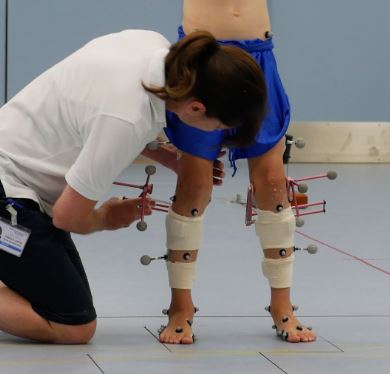
Locomotor assessment sensors
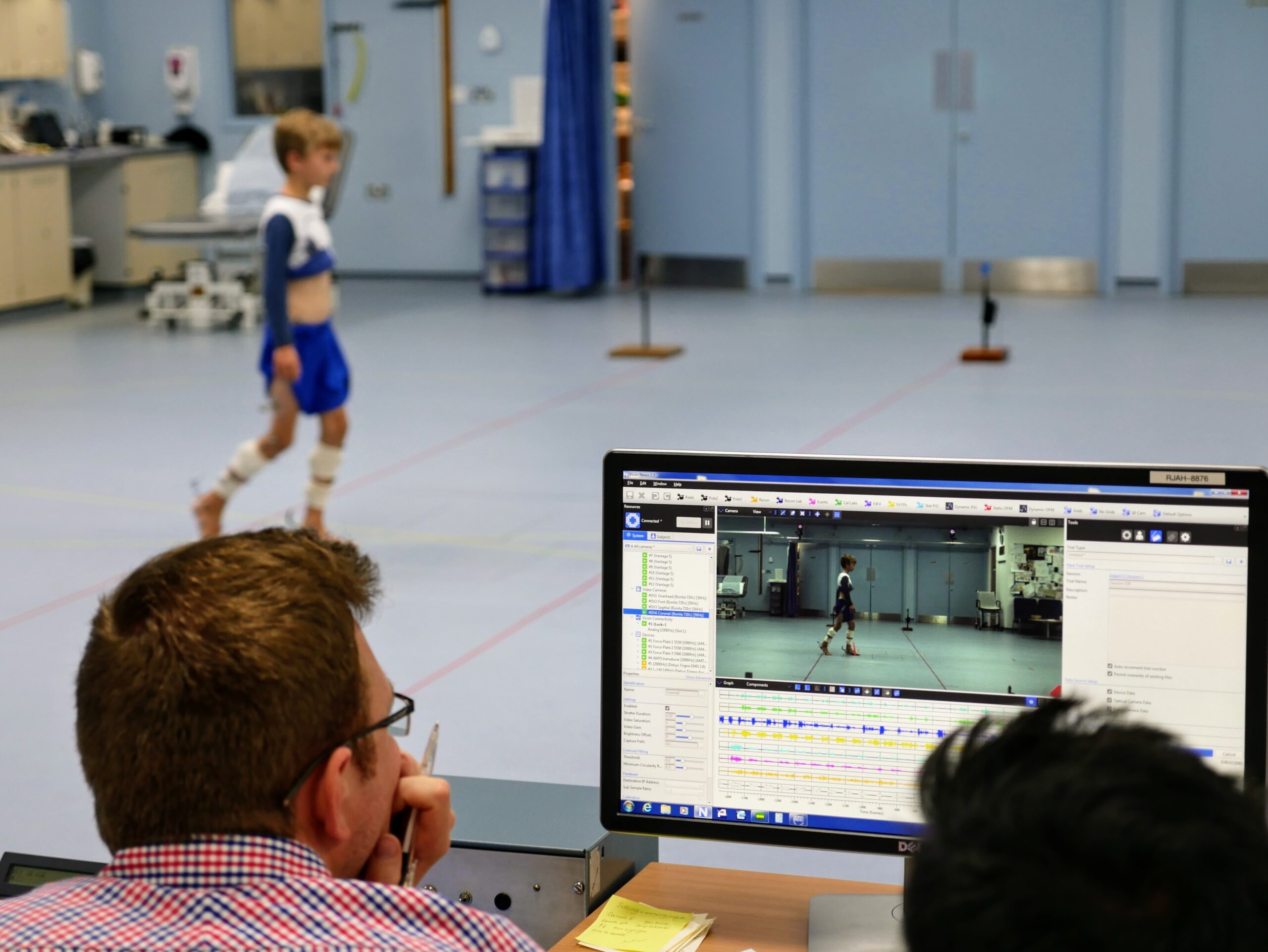
Research is vital to the team
Movement Analysis
Our main focus for movement analysis research in 2024 was feet. Feet are complex to analyse due to the large number of bones and joints, which challenges both our biomechanical analysis and our treatment options. Many different clinical conditions are associated with foot problems, from the relatively simple flat feet through to the more extreme pathological postures seen in conditions such as cerebral palsy, peripheral neuropathies, club foot and stroke.
Our previous work, funded by Action Medical Research entitled ‘Exploration of the role of subtalar joint morphology in the development of foot deformity in cerebral palsy’ raised many questions about how best to look after children’s feet. We decided to organise a national consensus meeting and, in December 2024, clinicians and researchers from across the UK met at Keele University to consider the challenges together. Fortunately, Action Medical Research agreed to fund the event and the Institute provided organisational support. We presented our own research and invited leaders in the field to do the same. Further research work is needed to answer the many questions which came out of the day, with the ultimate aim of improving NHS services.
One muscle is key to the biomechanics of the foot. Tibialis posterior helps to control foot posture, including maintaining the medial arch of the foot. Tibialis Posterior Tendon Dysfunction is a common problem which leads to painful changes in the posture of the foot of older adults. The James Lind Alliance has identified this problem as one if its top 10 research priorities in foot and ankle surgery. ORLAU was fortunate to receive a grant from the British Orthopaedic Foot and Ankle Society (BOFAS) in 2023. Recording electrical activity (electromyography, EMG) from tibialis posterior is done using a fine wire electrode inserted into the muscle using a needle. Healthy volunteers attended the gait laboratory through the first half of 2024 so we could record their muscle signals. We hope the data will allow us to understand how repeatable the signal is between visits and how it changes with age in both men and women. This will hopefully inform future studies.
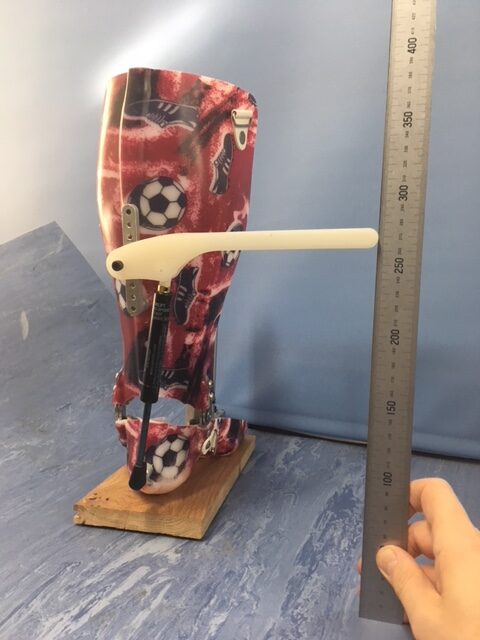
ORLAU Ankle Contracture Correction Device (CCD)
Rehabilitation Engineering
Building on last years capital replacement of the lathe and pillar drill, this year has seen the replacement of an ageing bandsaw and a significant upgrade to our welding, painting & dust extraction system to meet regulations. This investment provides additional safeguards for staff alongside increased ability within the workshop.
In April of this year, we successfully commercialised the ORLAU Ankle Contracture Correction Device Lever kit in partnership with Ricoh Print Solutions Europe, Telford. This was the first commercialisation of an ORLAU developed product in over 15 years and paves the way for more such partnerships in the future. Ricoh are at the forefront of additive manufacturing in the UK and are perfectly placed to help commercialise other products that are in the pipeline. This commercialisation has benefitted RJAH’s Dept of Orthotic Manufacturing service as they now have a single source supplier for the components in this kit and furthermore, this kit makes the ORLAU Ankle Contracture Correction Device available to the wider UK orthotic market.
The development of a new standing frame is in the final stages, with initial patient evaluations taking place over the next 12 months. To deliver this device, ORLAU has replaced one single supplier with approximately 15 new suppliers, primarily to spread our risk of continuous component supply but also taking advantage of more modern manufacturing techniques that some of these suppliers provide. It is both hoped and envisioned that some of these new suppliers will help with countless future development projects too.